

- HOME
-
Collaboration Partner Recruitment
- mask voice clip
- Underwater CO2 measurement and evaluation service
- Decentralized Exhaust Gas Circulation one-by-one VOC removal system
- Brain NaviTM Brainwave Analysis Service
- Film thermistor
- NeuroStoneTM
- Transparent Conductive Film
- Lithium-ion secondary battery characterization and degradation diagnosis solution
- Next-generation lithium ion secondary batteries
- Magnetorheological Elastomer (MRE)
- Ultrasound Transmission Metamaterial
- Collaboration Partner Recruitment Top
- New Business Creation Initiatives
- Activity Introduction
- Notices
Decentralized exhaust gas circulation
one-by-one VOC removal system
- Utilizing a compact and lightweight
rotor to achieve both energy saving
and VOC removal
Exhaust circulation concentration systems are a means of exhaust treatment for
the drying processes widely used in the manufacturing industry.
Why don't you work together with us to co-create VOC removal solutions
that provide both social and economic value, centering on technology for reducing
the size and weight of the rotor which is the core component?
Contact Us
-
Description
Partners who can undertake equipment design, manufacturing, sales, and other aspects to help us create a decentralized exhaust gas circulation one-by-one VOC removal system utilizing Murata's compact and lightweight rotor
-
Products used
Compact and lightweight rotor, and VOC treatment technology for an exhaust circulation concentration system based on the new concept of distributed exhaust circulation, making use of that rotor
*This product is under development.Therefore, the product specifications are subject to change without advance notice.
MATCHING
POINT
- ・Companies that can undertake equipment design, manufacturing, and sales of a compact distributed exhaust circulation concentration system utilizing Murata's compact and lightweight rotor
- ・Companies that can undertake design and installation of air conditioning to processes where the compact distributed exhaust circulation concentration system utilizing Murata's compact and lightweight rotor will be installed
- ・ Companies struggling with high investment costs for exhaust circulation concentration systems


Exhaust circulation concentration systems and combustion systems are used to treat toxic gases containing volatile organic compounds (VOCs) generated in the manufacturing processes of manufacturing industries. Issues facing these systems include the need for a large installation area and enormous facility investment, as well as high energy consumption for their operation. To address these issues, Murata has brought together original technologies to successfully reduce the size and weight of the rotor, the core component of an exhaust circulation concentration system, by 20-30% or more.
This rotor can be used to realize a decentralized exhaust gas circulation one-by-one VOC removal system, which is an exhaust circulation concentration system that addresses the installation area and facility investment issues and can utilize the waste heat generated in manufacturing processes as is, leading to energy savings.
Murata is seeking collaboration partners who can undertake equipment design, manufacturing, sales, and other aspects to help us utilize this rotor to achieve the distributed exhaust circulation one-by-one VOC removal system.
Contents
- About exhaust circulation concentration systems
- Original Murata technology that realizes rotor downsizing and weight reduction
- Four benefits provided by a compact distributed installation type system
- Vision for the utilization of the decentralized exhaust gas circulation one-by-one VOC removal system
- Message from the developers
About exhaust circulation concentration systems
Various organic solvents are used in the manufacturing processes of manufacturing industries such as printing, semiconductors, and automobiles, and the air containing volatile organic compounds (VOCs) generated at that time must undergo exhaust treatment based on the Air Pollution Control Law.
Exhaust circulation concentration systems are used for this exhaust decomposition treatment. Exhaust circulation concentration systems are used to purify air containing VOCs that flows in via ducts, and the core of these systems is a component called a rotor that adsorbs the VOCs. This rotor rotates slowly to adsorb the VOCs contained in the air and exhaust purified air.
Murata has successfully developed a rotor that has been made smaller and lighter by 20-30% or more while still maintaining VOC treatment capability. This makes it possible to downsize exhaust circulation concentration systems, contributing to both reliable VOC removal and significant energy savings.
Structure of Murata's rotor
1Adsorption zone
Air containing VOCs exhausted from a drying oven or other equipment passes through the rotor, where the VOCs are adsorbed. As a result, the VOCs are removed and purified air is exhausted.
2Desorption / recycling zone
After adsorbing sufficient VOCs, the rotor rotates to move to the desorption zone, where the VOCs are thermally desorbed from the rotor and separated as very highly concentrated gas. This separated concentrated gas is then treated by a downstream combustion system (RTO, CO, TO, etc.) to convert it to harmless gas.
3Cooling zone
The heated rotor is cooled in the cooling zone in preparation for the next adsorption. Meanwhile, the clean air purified in the adsorption zone circulates back to the drying oven while still retaining heat, and is reused.
 Principle of operation of Murata's rotor
[Solvents that can be adsorbed by this rotor]
Common organic solvents widely used in the manufacturing industry, including aromatic hydrocarbons such as BTX (benzene, toluene, xylene), hydrocarbons, and esters.
*In addition to the above, the rotor can also be applied to organic solvents specific to various applications, such as NMP in the battery industry and alcohols in the chemical industry. Please feel free to contact us for more information.
Original Murata technology that realizes rotor downsizing and weight reduction
Innovative rotor downsizing and weight reduction has been achieved by combining a number of proprietary technologies cultivated by Murata over many years.
Technology01Support made of material with high thermal conductivity, and an original structure
The rotor's support uses material with high thermal conductivity instead of common ceramics. This enables extremely efficient heating and cooling when adsorbing and desorbing VOCs, achieving high treatment capacity even in a small size. Furthermore, Murata's original rotor structure also helps achieve both high performance and downsizing, and rotor downsizing provides the additional benefit of weight reduction.
Technology02Highly precise slurry design technology
Slurry (coating) design technology cultivated in the development of Murata's flagship product, multilayer ceramic capacitors (MLCCs), is applied to bring out the fullest performance of the adsorbent. By evenly and uniformly applying a µm-order coating of an easily dispersible, refined adsorbent slurry onto the honeycomb structure of the rotor, the maximum adsorption performance is achieved with the minimum size.


If the particles are large and not uniformly coated, it is difficult to ensure the permeability and fluidity of VOC gases during dispersion.

Slurry (coating) design technology makes it possible to reduce the particle size and apply a fine and even coat. This provides easier dispersion for better permeability and fluidity of VOC gases.
Achieves the maximum VOC adsorption performance
with the minimum size
Technology03Materials Informatics (MI) that accelerates development
AI-based materials informatics technology is used in the selection of VOC adsorbents. For example, this enables swift judgments by using simulations to predict the optimal temperature conditions for adsorption and desorption, which previously required laboratory evaluation, and by calculating the adsorption energy. Material informatics are also applied to various other items, making it possible to exclude inappropriate materials at an early stage to efficiently search for promising materials and shorten development times.
-
 Before VOC adsorption
-
 After VOC adsorption
Simulations using a surrogate model based on density functional theory (DFT) enable swift and accurate evaluation of the VOC adsorption levels of various adsorbents.
(Left: Adsorbent before adsorbing VOC Right: Adsorbent after adsorbing VOC (toluene))
Four benefits provided by a compact distributed installation type system
The decentralized exhaust gas circulation one-by-one VOC removal system is an exhaust circulation concentration system that is made possible by Murata's compact and lightweight rotor, and can be installed near various production equipment. Achievement of a compact system provides various benefits in the production site.
Benefit01Energy savings through reuse of exhaust gas and exhaust heat
Downsizing allows the exhaust circulation concentration system to be placed near equipment that emits VOCs, so the purified clean air can be reused in the drying or other processes while still retaining heat. This eliminates the need for devices such as auxiliary heaters that were previously used to warm the air and humidity control equipment needed to regulate the humidity of the supply air, which therefore helps to reduce energy costs. In addition, it is also effective in reducing scope 1 and scope 2(*) greenhouse gases.
(*) Terms used to understand the greenhouse gas (GHG) emissions of companies. Scope 1 refers to direct gas emissions due to a company's business activities. Scope 2 refers to indirect gas emissions associated with the use of electrical, thermal, and steam energy purchased by a company from other companies.
Benefit02Reduction of facility investment costs through downsizing of the overall facility
The building and the large ducts installed throughout the factory that were needed for a centralized type system are no longer necessary. Furthermore, the exhaust airflow volume needed to send the concentrated VOCs to a downstream regenerative thermal oxidizer (RTO) can be reduced to 1/10 to 1/20 of the previous amount, which also improves energy efficiency by downsizing the RTO itself. These factors can help suppress costs when updating or introducing new exhaust circulation concentration system equipment.
Benefit03Flexible factory layout and phased expansion
The system is compact and lightweight, enabling easy installation in limited spaces within the factory. Even when adding new production lines, there is no need to replace large centralized equipment, and instead just the systems needed for the lines can be added. In addition, introduction of this system can help reduce the load on existing centralized systems.
Benefit04Enhancement of safety through risk dispersion
Distribution of treatment functions across various locations allows the impact to be minimized and the avoidance of situations such as the complete shutdown of production lines in the event of equipment trouble. There is also no need to transport VOCs containing flammable gases through large ducts, which helps to reduce the risk of fires, etc.
Vision for the utilization of the decentralized exhaust gas circulation one-by-one VOC removal system
Achieving a smaller system that is easier to install allows it to be used even in sites where the installation of exhaust circulation concentration systems had previously been a challenge, as well as processes requiring a more detailed response. We believe that managing VOC treatment for the entire factory at an even higher level will provide greater benefits to companies in various industries.
[Areas for application]
- Printing and painting industries: Ink and paint drying processes
- Chemical and semiconductor industries: Various manufacturing and drying processes
- Automotive industry: Paint drying processes
- Various other manufacturing industries with drying processes
Inquiries
We are seeking collaboration partners who can undertake equipment design, manufacturing, sales, and other aspects to help us create a decentralized exhaust gas circulation one-by-one VOC removal system, which is an exhaust circulation concentration system that is made possible by Murata's original compact and lightweight rotor.
If your company is interested in this service, please feel free to contact us using the inquiry form.
*This product is under development.Therefore, the product specifications are subject to change without advance notice.


Message from the developers
- Murata Manufacturing Co., Ltd.
Corporate Technology Planning & New Business Development Group
Corporate Technology & Business Development Unit
Kohei Awaya -
We believe that this initiative, which was developed internally to reduce GHG emissions (scope 1 and 2) and prevent pollution while at the same time saving energy, can contribute to creating value in various manufacturing industries, such as in widely-used drying processes. Going forward, we hope to provide these systems to customers as an environmental solutions business that contributes to both environmental and cost aspects as a part of sustainable manufacturing. We want to collaborate with partners who share our desire to create a new market segment consisting of compact distributed installation (one-by-one) types that combine production and facility equipment.
- Manufacturing Group
Ceramic Capacitor Business Unit
Yukio Sanada -
We are also utilizing Murata's manufacturing department to construct a test bed environment and verify reliability, as well as working to clarify the advantages, constraints, and other aspects when introduced to general drying equipment. We intend to continue these efforts in order to provide more useful solutions to external customers.
- Corporate Technology Planning & New Business Development Group
Corporate Technology & Business Development Unit
Masahiko Shigaki -
As societal demands for decarbonization increase, many companies are pursuing energy saving initiatives. However, we hear many voices indicating hesitation to take the next step due to issues related to cost-effectiveness. Murata solutions use new approaches to achieve significant energy savings, and can help to address the challenges your company is facing. Please do not hesitate to contact us if you would like to work together to create new value.
- Corporate Technology Planning & New Business Development Group
Corporate Technology & Business Development Unit
Koji Sawada -
This solution leverages Murata's strength in vertically integrated technical development, ranging from materials to finished products, and we believe it holds great potential for the environmental fields of VOC treatment and energy saving. At the same time, we recognize that collaboration with external partners is essential in order to achieve social implementation. We hope to work together with everyone to create new value.

Inquiries
We are seeking collaboration partners who can undertake equipment design, manufacturing, sales, and other aspects to help us create a decentralized exhaust gas circulation one-by-one VOC removal system, which is an exhaust circulation concentration system that is made possible by Murata's original compact and lightweight rotor.
If your company is interested in this service, please feel free to contact us using the inquiry form.
*This product is under development.Therefore, the product specifications are subject to change without advance notice.
Project Examples for Collaboration
-

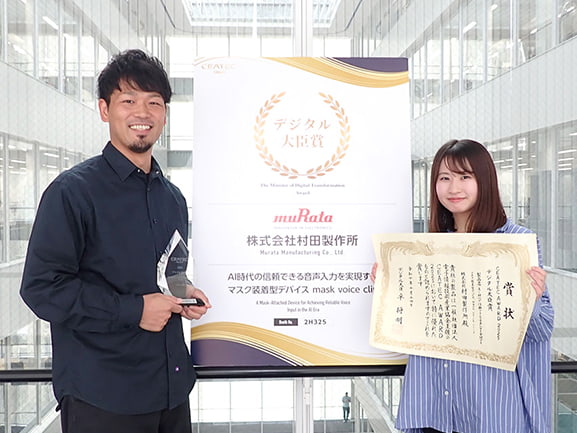
A revolutionary advance in voice input less affected by noise clipped to a mask, mask voice clip is an input device that isolates the wearer’s voice
Mask voice clip is a voice input device clipped to masks for highly accurate real-time voice isolation even in noisy environments.
We seek parties interested in this technology, those with ideas for potential applications, and those who might consider voice input deployment in medical settings, manufacturing, or construction.more
-
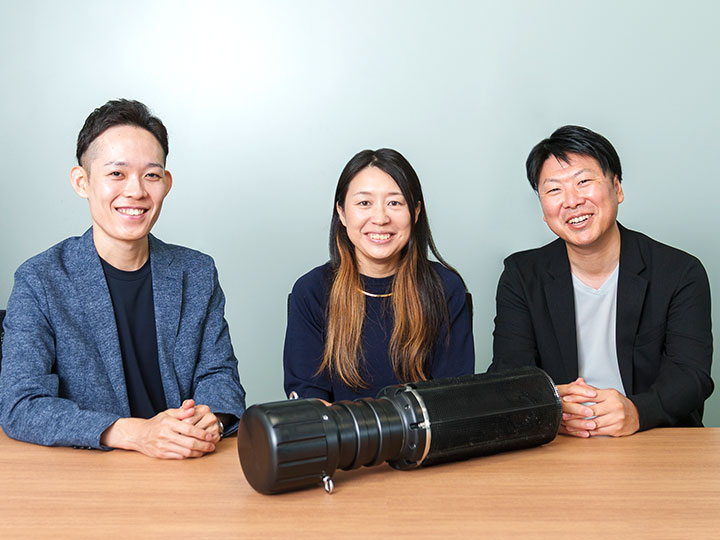
Development of a measuring device that makes it possible to visualize the amount of CO2 in seaweed beds "Underwater CO2 measurement and evaluation service" revolutionizes evaluation of blue carbon
Murata's underwater CO2 concentration measuring device enables easy and highly accurate measurement of CO2 in the ocean. Continuous measurement of underwater CO2 concentration has traditionally been considered difficult, so, by making it more accessible, this device holds the potential to greatly change methods for evaluating blue carbon. We are seeking partners for collaboration, including businesses, organizations, and others facing challenges in evaluating blue carbon, as well as companies and others interested in carbon credit trading.
more
-
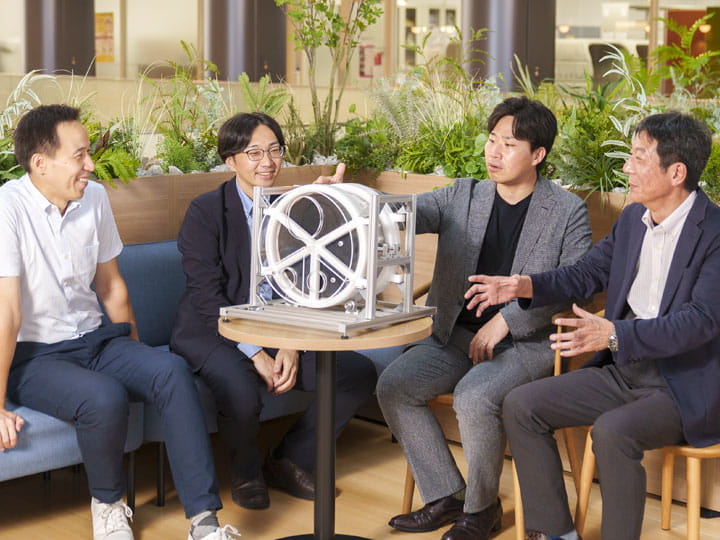
Decentralized exhaust gas circulation one-by-one VOC removal system - Utilizing a compact and lightweight rotor to achieve both energy saving and VOC removal
In order to downsize exhaust circulation concentration systems that treat VOCs, we have achieved downsizing and weight reduction of 20-30% or more for the core component, the rotor. We are looking for collaboration partners who can work together with us to create new VOC treatment solutions that utilize this rotor to achieve both energy savings and VOC removal.
more
-

Brain NaviTM — A simple and high-precision brainwave analysis service that enables accurate “visualization” of momentary sensations and cognition
Brain NaviTM enables accurate understanding of human brain responses to stimuli such as seeing and hearing. We are looking for partners who seek to solve challenges by utilizing this analysis data to accurately personalize products and services.
more
-

Increasing the added value of products with ultra-thin, high sensitivity sheet-shaped temperature sensors called film thermistors
Murata has developed an ultra-thin sheet-shaped film thermistor with a thickness of 50 microns that can be freely bent or sandwiched and is capable of real-time, multi-point temperature measurement of objects. We are seeking partner companies that wish to develop new products utilizing this technology or that want to make use of it in thermal analysis to solve challenges.
more
-

NeuroStoneTM 3D-printed small free-form inter-connected ceramic devices
NeuroStoneTM is a 3D-printed, free-form inter-connected ceramic circuit board that enables freely three-dimensional internal wiring, thanks to Murata' s expertise in material development and co-firing. We are seeking partners to collaborate with us in leveraging this small free-form inter-connected ceramic 3D printing technology to create products that contribute to equipment downsizing and less invasive medical care.
more
-
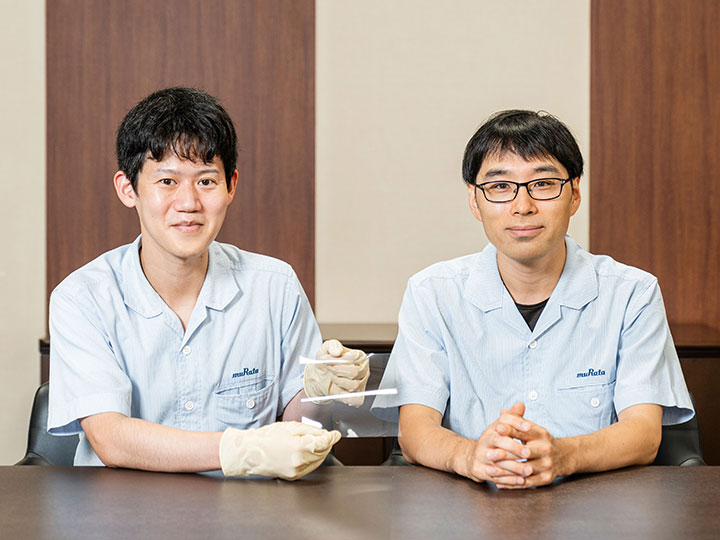
Transparent conductive film using the new material of MFT that can be both conductive and freely shaped
Murata Manufacturing is looking for partners to create new value together with us by utilizing bendable transparent conductive film and transparent conductive film that can be adapted to complex shapes using the new material of MFT (*in-house name).
more
-

Lithium-ion secondary battery characterization and degradation diagnosis solution
We are looking for collaboration partners, who are aiming to use batteries safely and efficiently by utilizing battery characterization and deterioration diagnosis technology to non-destructively measure the capacity deterioration factors and resistance increase of Lithium-ion secondary batteries.
more
-

Quadruple the power of lithium ion secondary batteries with porous current collectors
We are looking for co-creation partners for the development of porous current collectors and their implementation into lithium ion secondary batteries that would achieve the fourfold power generation compared to that of the conventional lithium ion secondary batteries.
more
-

Magnetorheological Elastomer (MRE) That Can Reproduce Hardness from Marshmallows to Erasers
Murata Manufacturing is looking for partners who can collaborate with us to create new products and applications by using the magnetorheological elastomer (MRE) material whose hardness changes when a magnetic field is applied to it.
more
-

Exclusive Acoustic Metamaterial from Murata Manufacturing - Ultrasound Transmission Metamaterial technology that enhances the ultrasound transmission through materials
Murata Manufacturing is looking for creative partners that increase the transmittance of ultrasonic waves to enhance the functionality of their devices and open up new markets.
more
