

- HOME
-
Collaboration Partner Recruitment
- mask voice clip
- Underwater CO2 measurement and evaluation service
- Decentralized Exhaust Gas Circulation one-by-one VOC removal system
- Brain NaviTM Brainwave Analysis Service
- Film thermistor
- NeuroStoneTM
- Transparent Conductive Film
- Lithium-ion secondary battery characterization and degradation diagnosis solution
- Next-generation lithium ion secondary batteries
- Magnetorheological Elastomer (MRE)
- Ultrasound Transmission Metamaterial
- Collaboration Partner Recruitment Top
- New Business Creation Initiatives
- Activity Introduction
- Notices
We have ended our recruitment of collaboration partners for the thermal interface material.
Murata has created an environmentally
friendly “thermal interface material”
made of biomass resin and lightweight
filler with the aim of providing a solution to
issues associated with thermal interface material.
By utilizing the advanced “thermal interface material,” it is possible to create products that
make people’s lives richer and more convenient.
-
Description
Murata partners aiming to create more advanced products by using the more lightweight and environmentally friendly “thermal interface material” to solve issues related to insulation-type thermal interface material
-
Products used
“Thermal interface material” using biomass resin and lightweight filler
*This product is under development.Therefore, the product specifications are subject to change without advance notice.
MATCHING
POINT
- ・Companies experiencing issues with silicone resin when using heat-dissipating sheets
- ・Companies aiming to develop more lightweight products such as cameras, electronic components, and automotive components
- ・Manufacturers of resin materials who can provide their cooperation in the production of the "thermal interface material" and the resin used in it
- ・Companies looking for more environmentally conscious thermal interface material

“Heat-dissipating sheets” or “thermal interface material” are placed among electronic components , etc., in the gap between heat-generating areas and heat-dissipating components (such as heat sinks). The purpose of these materials is to efficiently transfer heat. Generally speaking, the term “heat dissipating” is used, but it should be kept in mind that these materials transfer heat. This is why Murata Manufacturing prefers the term “thermal interface material.” The high-quality silicone resin commonly used as a heat-dissipating material has issues related to the risk of contact failure. In recent years, Murata Manufacturing has been working to develop new “thermal interface materials,” with eliminating these issues as the primary objective, while also considering factors such as “making products more lightweight” and “making products more environmentally friendly.” In this way, we hope to create new value in the marketplace, in partnership with companies requiring such “thermal interface materials.”
About the “thermal interface material” from Murata Manufacturing
Typical insulation-type thermal interface material presently in use are made of two materials: alumina (aluminum oxide) and silicone resin. The ratio is 80% alumina to 20% silicone. The “thermal interface material” developed by Murata Manufacturing replaces alumina with a lightweight material and also replaces the silicone resin with biomass. This results in a thermal interface material that is both more lightweight and environmentally friendly.

Note: Two types are available to provide optimal performance in a variety of locations.
 Sheet type
The sheet type is suitable for use in cases where the layout of the board surface or heat sink is not complex. It is a soft material even when solidified into a sheet shape. Therefore, it can be used while bent.
Sheet type
The sheet type is suitable for use in cases where the layout of the board surface or heat sink is not complex. It is a soft material even when solidified into a sheet shape. Therefore, it can be used while bent.
 Paste type
The paste type is flowable and suitable for locations with a complex layout or for filling in gaps left by the sheet type.
Paste type
The paste type is flowable and suitable for locations with a complex layout or for filling in gaps left by the sheet type.
Features of the “thermal interface material” from Murata Manufacturing
Feature01Improvements for issues caused by silicone resin
Thermal interface material employing silicone resin can generate siloxane gas due to temperature changes in the usage environment. Moreover, swelling due to heat can give rise to a phenomenon known as “pump out,” in which the resin seeps out. The siloxane gas may cause contact failure in electronic circuits. In addition, "pump out" causes a reduction in the heat transfer performance. Accordingly, both were major issues.The “thermal interface material” from Murata Manufacturing uses biomass resin in place of silicone resin, so it generates no siloxane gas and reduces the possibility of pump out.


Issues with thermal interface materials using silicone resin
Feature02Approximately 40% reduction in weight compared with conventional thermal interface material
Conventional thermal interface material contain about 80% alumina (aluminum oxide), which has the ability to transfer heat. The “thermal interface material” from Murata Manufacturing replaces the alumina with a different, more lightweight material, resulting in a weight reduction of about 40% overall. When incorporated into electronic components and the like, this weight reduction is likely to contribute to a reduction in energy consumption.

Feature03Environmentally friendly “thermal interface material”
One problem with the silicone resin used in conventional thermal interface material is that, when it is incinerated as part of the trash disposal process, it generates an amount of CO2 equivalent to approximately two times its original volume. However, the resin used in place of silicon in the “thermal interface material” from Murata Manufacturing contains a high percentage of biomass, and this helps reduce the burden on the environment. Also, when silicone resin is incinerated, it fuses with the alumina filler (powder), making it impossible to extract just the filler afterwards. However, the new resin containing the biomass material can be completely separated out at a certain temperature. This makes it possible to extract just the filler and improves recyclability.

Feature04Aiming for an insulation-type material with higher thermal conductivity
The thermal conductivity of conventional insulation type heat dissipating materials ranges from 1 to 15 W/(m・K), and that of the most widely used materials ranges from 3 to 6 W/(m・K). The “thermal interface material” from Murata Manufacturing already provides a thermal conductivity of 7 W/(m・K). Moving forward, we hope to achieve even higher thermal conductivity in our insulation-type materials.

Use cases for the “thermal interface material” from Murata Manufacturing
As a material used in electronic components, we expect the main application for the new thermal interface material to be in electronic products such as personal computers, game consoles, automotive components, and electric home appliances. For example, since making products that users carry around with them such as cameras “even one gram lighter” is a common goal, this lightweight thermal interface material will be an effective choice. We also expect it to be used in automotive components, such as vehicle cameras and water-cooled batteries. In addition to the above, we anticipate the new thermal interface material to be very effective in areas where large numbers of devices operate under heavy loads, such as communication base stations or data centers. This is why Murata is seeking partners eager to create and pursue new value, including new usage areas.


Message from the developers
Murata Manufacturing Co., Ltd.
Material Process Development Dept. Material Technology Center Technology & Business Development Unit
Hitomi Kozawa
Asa Takahashi
Technology & Business Development Unit Materials Technology Center New Materials & Process Development Dept.
The development of the material began with the concept of “using biomass material to contribute to the improvement of the global environment.” Starting from this basis, the aims were to replace silicone resin, which is derived from petroleum, with a resin based on biomass materials to reduce the weight by making enhancements to the filler. However, a detailed investigation of market conditions revealed that biomass materials still lack recognition as a means of providing added value. So we decided to devote more study to the challenge of providing added value from materials. During this process, we discovered that there are number of quality issues associated with silicone resin, and we then proceeded with our R&D efforts based on a new concept of solving these issues through the use of biomass resin. This gave us confidence that the thermal interface material we were developing would provide additional benefits. We will be delighted if our efforts prove useful to our customers and partners.
We have ended our recruitment of collaboration partners for the thermal interface material.

Inquiries
Murata Manufacturing is looking for research institutions, companies, and other organizations who are in the relentless pursuit of innovation and interested in turning ideas into unique solutions that could quite possibly shape the future of electronics and our global society.
*This product is under development.Therefore, the product specifications are subject to change without advance notice.
Project Examples for Collaboration
-

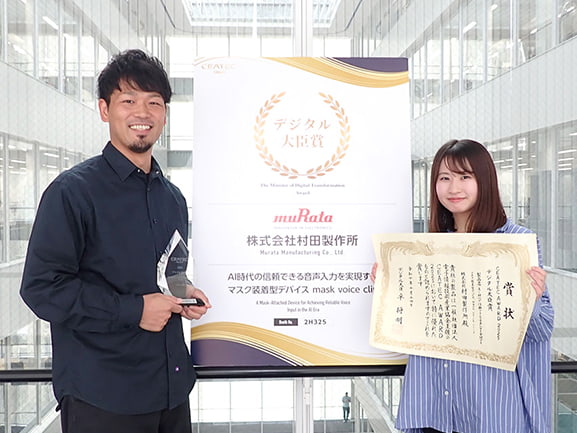
A revolutionary advance in voice input less affected by noise clipped to a mask, mask voice clip is an input device that isolates the wearer’s voice
Mask voice clip is a voice input device clipped to masks for highly accurate real-time voice isolation even in noisy environments.
We seek parties interested in this technology, those with ideas for potential applications, and those who might consider voice input deployment in medical settings, manufacturing, or construction.more
-
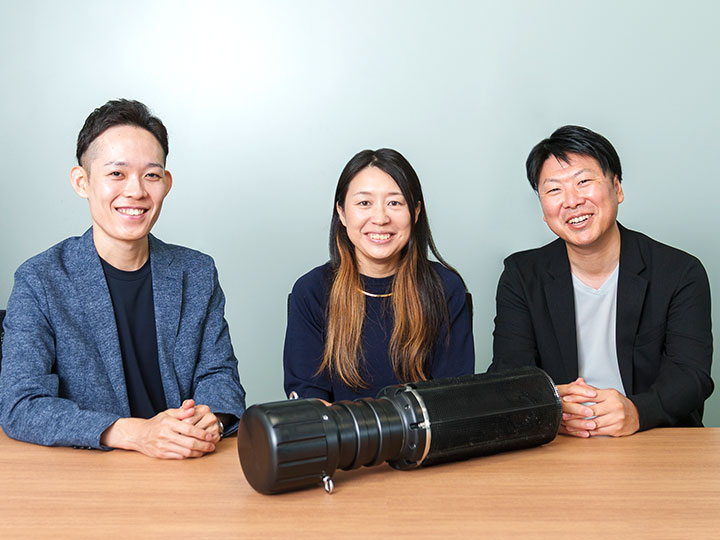
Development of a measuring device that makes it possible to visualize the amount of CO2 in seaweed beds "Underwater CO2 measurement and evaluation service" revolutionizes evaluation of blue carbon
Murata's underwater CO2 concentration measuring device enables easy and highly accurate measurement of CO2 in the ocean. Continuous measurement of underwater CO2 concentration has traditionally been considered difficult, so, by making it more accessible, this device holds the potential to greatly change methods for evaluating blue carbon. We are seeking partners for collaboration, including businesses, organizations, and others facing challenges in evaluating blue carbon, as well as companies and others interested in carbon credit trading.
more
-
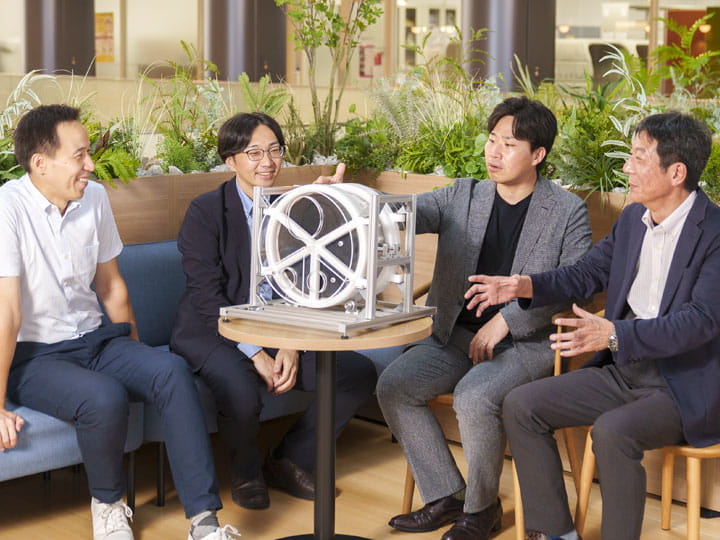
Decentralized exhaust gas circulation one-by-one VOC removal system - Utilizing a compact and lightweight rotor to achieve both energy saving and VOC removal
In order to downsize exhaust circulation concentration systems that treat VOCs, we have achieved downsizing and weight reduction of 20-30% or more for the core component, the rotor. We are looking for collaboration partners who can work together with us to create new VOC treatment solutions that utilize this rotor to achieve both energy savings and VOC removal.
more
-
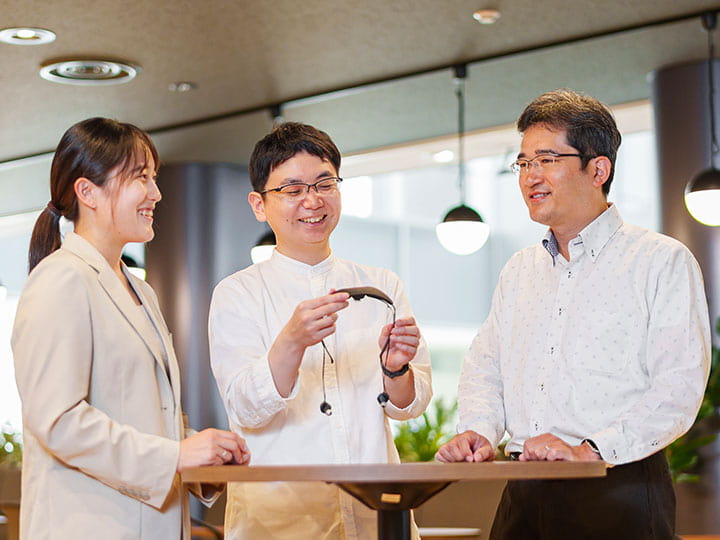
Brain NaviTM — A simple and high-precision brainwave analysis service that enables accurate “visualization” of momentary sensations and cognition
Brain NaviTM enables accurate understanding of human brain responses to stimuli such as seeing and hearing. We are looking for partners who seek to solve challenges by utilizing this analysis data to accurately personalize products and services.
more
-

Increasing the added value of products with ultra-thin, high sensitivity sheet-shaped temperature sensors called film thermistors
Murata has developed an ultra-thin sheet-shaped film thermistor with a thickness of 50 microns that can be freely bent or sandwiched and is capable of real-time, multi-point temperature measurement of objects. We are seeking partner companies that wish to develop new products utilizing this technology or that want to make use of it in thermal analysis to solve challenges.
more
-

NeuroStoneTM 3D-printed small free-form inter-connected ceramic devices
NeuroStoneTM is a 3D-printed, free-form inter-connected ceramic circuit board that enables freely three-dimensional internal wiring, thanks to Murata' s expertise in material development and co-firing. We are seeking partners to collaborate with us in leveraging this small free-form inter-connected ceramic 3D printing technology to create products that contribute to equipment downsizing and less invasive medical care.
more
-
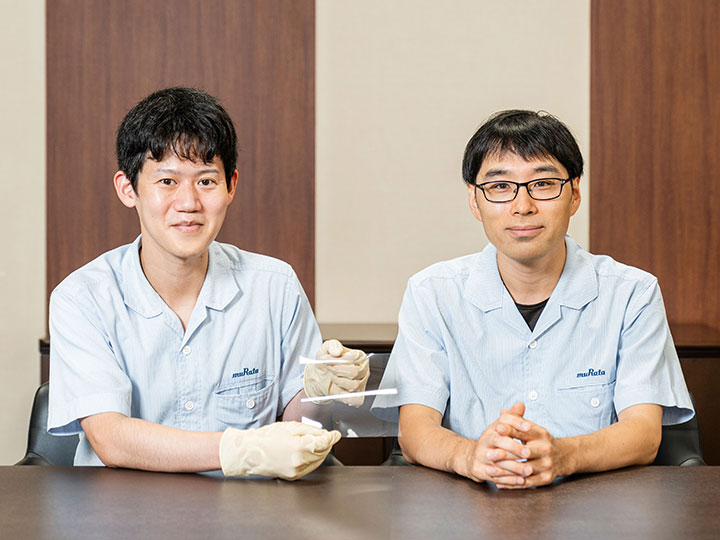
Transparent conductive film using the new material of MFT that can be both conductive and freely shaped
Murata Manufacturing is looking for partners to create new value together with us by utilizing bendable transparent conductive film and transparent conductive film that can be adapted to complex shapes using the new material of MFT (*in-house name).
more
-

Lithium-ion secondary battery characterization and degradation diagnosis solution
We are looking for collaboration partners, who are aiming to use batteries safely and efficiently by utilizing battery characterization and deterioration diagnosis technology to non-destructively measure the capacity deterioration factors and resistance increase of Lithium-ion secondary batteries.
more
-

Quadruple the power of lithium ion secondary batteries with porous current collectors
We are looking for co-creation partners for the development of porous current collectors and their implementation into lithium ion secondary batteries that would achieve the fourfold power generation compared to that of the conventional lithium ion secondary batteries.
more
-

Magnetorheological Elastomer (MRE) That Can Reproduce Hardness from Marshmallows to Erasers
Murata Manufacturing is looking for partners who can collaborate with us to create new products and applications by using the magnetorheological elastomer (MRE) material whose hardness changes when a magnetic field is applied to it.
more
-
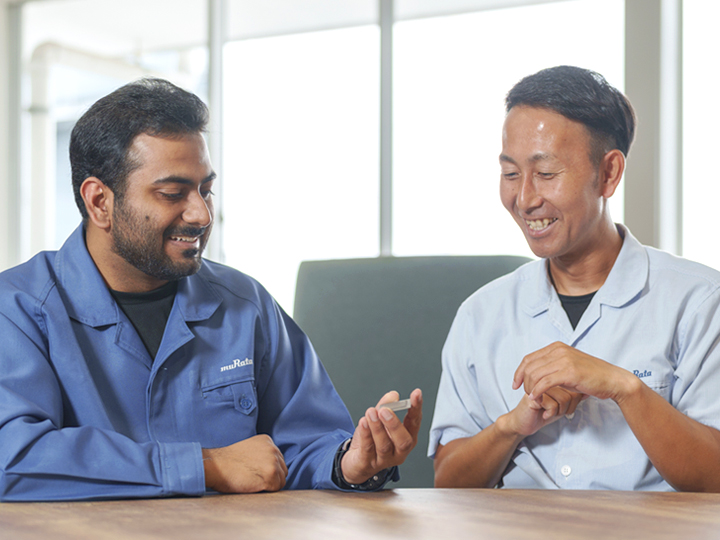
Exclusive Acoustic Metamaterial from Murata Manufacturing - Ultrasound Transmission Metamaterial technology that enhances the ultrasound transmission through materials
Murata Manufacturing is looking for creative partners that increase the transmittance of ultrasonic waves to enhance the functionality of their devices and open up new markets.
more