

- HOME
-
Collaboration Partner Recruitment
- mask voice clip
- Underwater CO2 measurement and evaluation service
- Decentralized Exhaust Gas Circulation one-by-one VOC removal system
- Brain NaviTM Brainwave Analysis Service
- Film thermistor
- NeuroStoneTM
- Transparent Conductive Film
- Lithium-ion secondary battery characterization and degradation diagnosis solution
- Next-generation lithium ion secondary batteries
- Magnetorheological Elastomer (MRE)
- Ultrasound Transmission Metamaterial
- Collaboration Partner Recruitment Top
- New Business Creation Initiatives
- Activity Introduction
- Notices
NeuroStoneTM, 3D-printed small
free-form inter-connected ceramic devices
that provide freedom in the design of
electronic equipment for medical applications.
NeuroStoneTM is a small free-form inter-connected ceramic devices created using a 3D printer.
It revolutionizes circuit boards by moving from conventional, restricted flat-surface wiring to
three-dimensional wiring with a high degree of freedom.
Contact Us
-
Description
Collaboration partners who will aim together with us to make healthcare and medical careless invasive by utilizing small free-form interconnected ceramic device.
-
Products used
NeuroStoneTM, 3D-printed small free-form inter-connected ceramic devices are customized for small ceramic circuits ranging in size from 1 to 5 mm.
*This product is under development.Therefore, the product specifications are subject to change without advance notice.
MATCHING
POINT
- Medical and industrial equipment manufacturers wanting to downsize their equipment

NeuroStoneTM, a small free-form inter-connected ceramic device, is manufactured using unique Murata's patented 3D printing technology. Compared to conventional PCBs, FPCs, smaller 3D printed ceramic device can be fabricated more freely into three-dimensional custom shapes. This flexibility allows other functional components to be optimally positioned within the device to make it more compact and highly efficient. We are seeking collaboration partners to join us in creating next-gen medical devices that are less invasive using this innovative NeuroStoneTM.
What is NeuroStoneTM?
We coined the name NeuroStoneTM by combining "neuron" (nerve cells in the brain) and "stone" (ceramics). At Murata, we have traditionally referred to ceramics as "wonder stones."
The idea for this product came from using these wonder stones to create a circuit board resembling a neural network in the brain, which is ideal natural prototype.
Murata's proprietary 3D printing technology allows us to print in any shape, enabling three-dimensional multi-directional internal wiring. We can create uneven surfaces and cavities with high packing density of electrodes inside the module, allowing you to miniaturize and enhance the functionality of equipment design by optimal arrangement other components.
Additionally, NeuroStoneTM has high dissipation performance thanks to its metal wiring and heat insulation properties provided by its ceramics. This ensures temperature control to prevent harm to the body.
This combination of characteristics can help reduce the size and increase the functionality of industrial equipment, as well as make medical equipment less invasive.
NeuroStoneTM
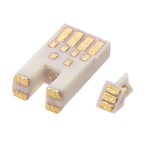
|
PCB
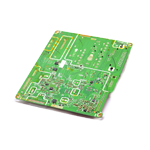
|
FPC
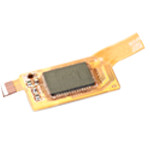
|
Ceramic circuit board
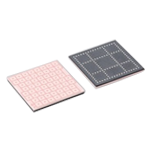
|
MID
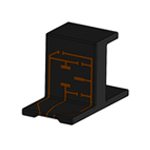
|
|
|---|---|---|---|---|---|
| Degree of freedom - free-form | Excellent Fully 3D design *1 |
Poor | Average | Average | Good |
| Heat resistance | Good 300°C/572°F > *2 |
Average | Average | Excellent | Average |
| Degree of freedom in wiring thickness (=Heat dissipation) |
Excellent About 0.2 mm *3 |
Excellent | Poor | Good | Poor |
| Size range of circuit board that can be manufactured | Average | Good | Good | Average | Excellent |
NeuroStoneTM Advantages
- *1 : Expansive form flexibility enables full 3D design.
- *2 : NeuroStoneTM is fabricated by co-firing at just under 1,000°C/1,830°F, giving it heat resistance up to over 300°C/572°F
- *3 : Wiring can be printed to a metal thickness of approximately 0.2 mm, providing excellent heat dissipation, electrode packing density and multi-directional interconnect freedom
Heterogenous material integrated 3D-printing technology that can only be warranted by a long-established ceramic electronic component manufacturer
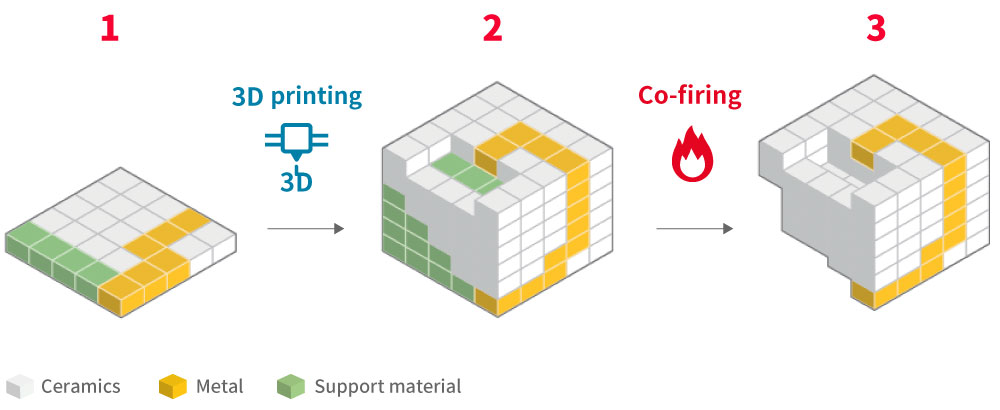
Freely printed from three different materials
- 1. The 3D-printed small free-form inter-connected ceramic devices are fabricated from three distinct materials: ceramics, conductive metal, and a support material for forming cavities.
- 2. These materials are layered to achieve the desired shape.
- 3. During the co-firing process, the support materials used to create the cavities are burned off, leaving behind the printed ceramics and metals. This results in a three-dimensional free-form ceramics and metal electrodes inside and outside.
Murata's proprietary know-how is effectively used in the process from material development to cofiring.
We developed NeuroStoneTM by accumulating a wide range of technological innovations, including next-gen 3D printer-suitable ink development and firing control.
For instance, if materials are simply mixed together, the ink will settle and separate, making it unsuitable for 3D printing. Therefore, it is essential to skillfully mix the materials to create stable ink formula.
Additionally, co-firing different types of materials together during fabrication is challenging. Different materials exhibit varying shrinkage behaviors during cofiring. If only one material shrinks, stress occurs between the heterogeneous materials, potentially causing them to break. It is crucial to control the co-firing temperature and the gas in the firing furnace to ensure the materials join together without breaking.
Murata has cultivated expertise in material development and firing after years of research and testing. The expertise has enabled us to overcome ink and firing challenges to develop NeuroStoneTM that meet the high reliability requirements of medical devices.
Benefits of NeuroStoneTM using
Feature01Downsize and increase functionality and reliability of equipment by optimal placement of components
1. Downsizing Equipment:
You can now custom design components to fit in the free space of your equipment. This design flexibility provides you the ability to maximize the space requirements and ultimately leads to a downsizing of your equipment and miniaturizing your devices.
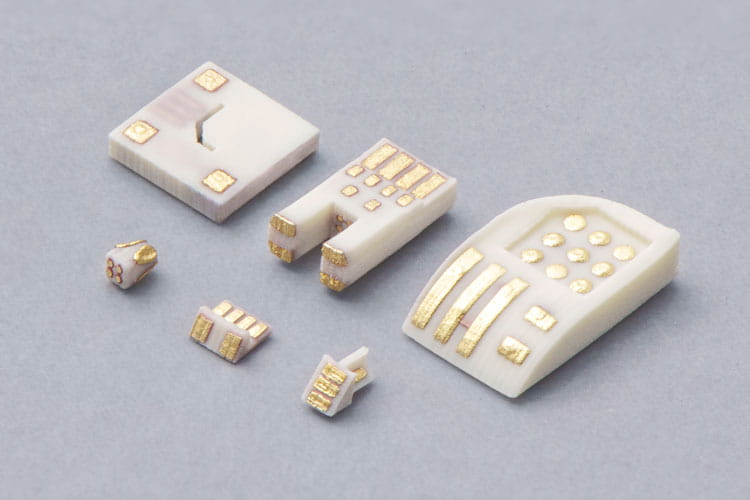
2.Incorporating Three-Dimensional Internal Wiring:
Unlike conventional flat circuits (PCBs, FPCs), it is now possible to design wiring three-dimensionally in multiple directions. This allows for efficient wiring connections and the adjustment of the number and position of components, leading to the creation of more functional equipment.
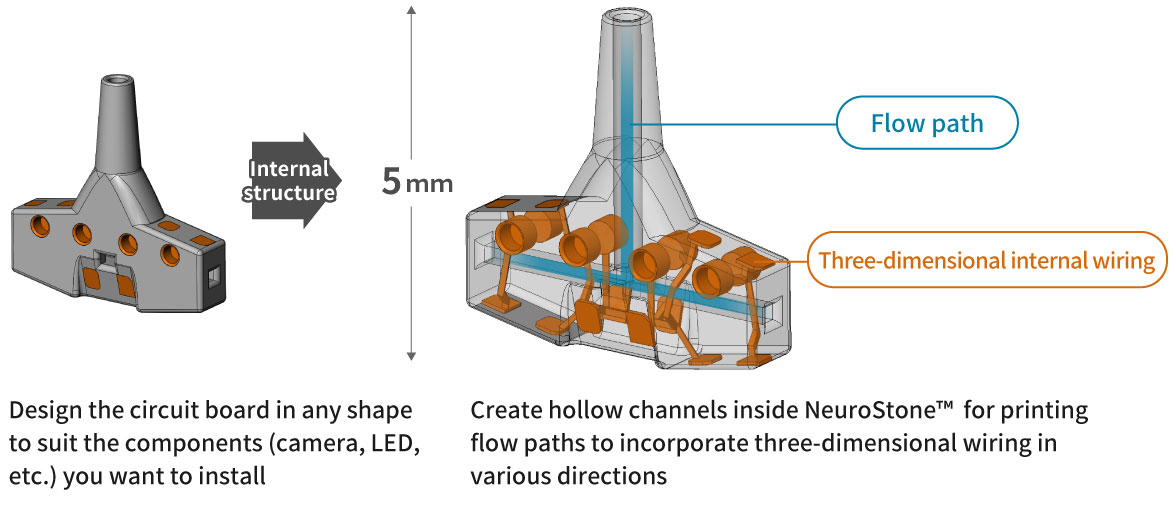
3.Designing Unevenness and Cavities:
By designing ridges and cavities inside NeuroStoneTM, LEDs, sensors, and other equipment can be installed in internal hollow channels. Flow path printing for fluids is also possible.
Sensors can be positioned and oriented for easy sensing, enabling higher precision sensing.
With the above benefits, NeuroStoneTM can improve reliability and facilitate the development of the next generation device beyond the role of a simple circuit board.
Feature02Possesses both high heat resistance and heat dissipation
Using various functional components on a circuit to enhance functionality can lead to increased electricity flow, which in turn generates more heat.
If components produce heat, they could potentially harm the body. Thus, temperature control is crucial.
NeuroStoneTM offers excellent heat dissipation due to its metal wiring and effective heat insulation provided by its ceramics. This allows it to channel heat along an optimal path, preventing harm to the body. Additionally, it is fired at nearly 1,000°C/1,830°F, giving it high heat resistance.
Feature03Contributing to making medical care minimally invasive
We anticipate that NeuroStoneTM will be particularly valuable to medical and industrial equipment manufacturers looking to reduce the size of their devices. Our small free-form inter-connected ceramic 3D printing technology allows for the production of small circuit boards measuring just a few millimeters. For example, we envision NeuroStoneTM being used at the tips of endoscopes, different electric catheters, and other medical instruments. It is crucial to accurately integrate various electronic components into these compact devices that are inserted into the body. With NeuroStoneTM, each component can be optimally arranged, enabling equipment downsizing. This innovation facilitates the development of devices that impose less strain on the body, ultimately contributing to a less invasive medical care solution.
NeuroStoneTM utilization examples
Utilization example01Endoscopes
Optimal component placement makes endoscopes smaller and less invasive
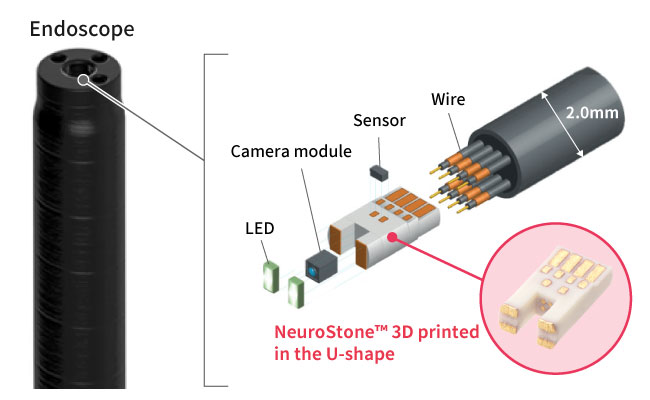
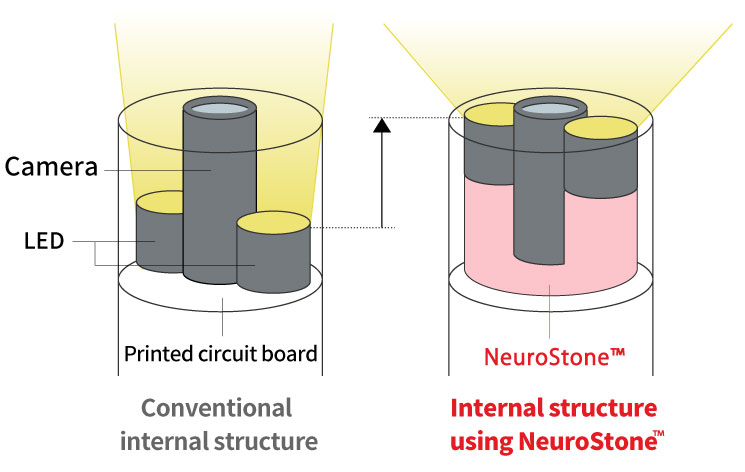 Comparison diagram of a conventional endoscope and an endoscope with NeuroStoneTM
It is possible to make any shape, and place the lighting and other functions in even more optimal places
Comparison diagram of a conventional endoscope and an endoscope with NeuroStoneTM
It is possible to make any shape, and place the lighting and other functions in even more optimal places
Endoscopes inserted into the body require various electronic components housed within a thin tube. It is crucial to align the LED light with the camera for effective illumination. Traditional methods of bending film-like boards often fail to achieve this precision.
However, NeuroStoneTM devices can be 3D printed into unique shapes. By utilizing a U-shaped NeuroStoneTM, we can precisely position components in smaller devices, enabling endoscopes that efficiently illuminate internal structures of the body.
Utilization example02Catheters
Improve functionality by tilting the sensor in a specific direction

Electric catheters inserted into blood vessels are quite small, measuring about 1 mm in diameter. This necessitates positioning the sensor at a specific angle inside the device. Traditional methods of combining printed circuit boards with resin components often struggle to achieve this precise angle. In contrast, NeuroStoneTM allows us to mold the ideal angle for optimal sensing in advance, making it easier to integrate the sensor. This approach maximizes the functionality of the sensor and enhances the precision of medical equipment.
Inquiries
Murata seeks partners to help use and commercialize NeuroStoneTM for developing circuit that enable equipment downsizing and embracing invasive medical care.
Please reach out via our contact form, when you have any questions or your company is interested in collaborating with us.
*This product is under development.Therefore, the product specifications are subject to change without advance notice.

Message from the developers
- Murata Manufacturing Co., Ltd.
NeuroStoneTM Development Unit
Takumi Okashiro -
NeuroStoneTM is a distinctive product exclusively developed by Murata, leveraging our expertise in ceramic electronic components. We believe that NeuroStoneTM will lead to technological innovations that will reduce the size and increase the functionality and reliability of your products.
Currently, this product is still in development, and we face several challenges before bringing it to market. However, we are excited to collaborate with partners who can help us overcome these obstacles and achieve innovation together.

Inquiries
NeuroStoneTM is a 3D-printed, free-form inter-connected ceramic circuit board that enables freely three-dimensional internal wiring, thanks to Murata' s expertise in material development and co-firing. We are seeking partners to collaborate with us in leveraging this small free-form inter-connected ceramic 3D printing technology to create products that contribute to equipment downsizing and less invasive medical care.
*This product is under development.Therefore, the product specifications are subject to change without advance notice.
Project Examples for Collaboration
-

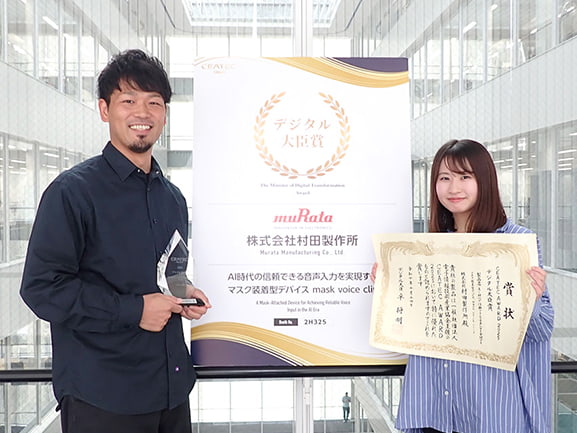
A revolutionary advance in voice input less affected by noise clipped to a mask, mask voice clip is an input device that isolates the wearer’s voice
Mask voice clip is a voice input device clipped to masks for highly accurate real-time voice isolation even in noisy environments.
We seek parties interested in this technology, those with ideas for potential applications, and those who might consider voice input deployment in medical settings, manufacturing, or construction.more
-
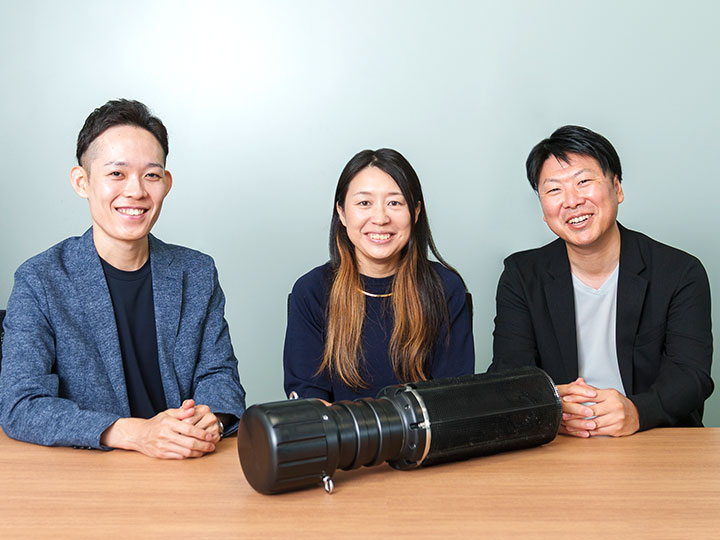
Development of a measuring device that makes it possible to visualize the amount of CO2 in seaweed beds "Underwater CO2 measurement and evaluation service" revolutionizes evaluation of blue carbon
Murata's underwater CO2 concentration measuring device enables easy and highly accurate measurement of CO2 in the ocean. Continuous measurement of underwater CO2 concentration has traditionally been considered difficult, so, by making it more accessible, this device holds the potential to greatly change methods for evaluating blue carbon. We are seeking partners for collaboration, including businesses, organizations, and others facing challenges in evaluating blue carbon, as well as companies and others interested in carbon credit trading.
more
-
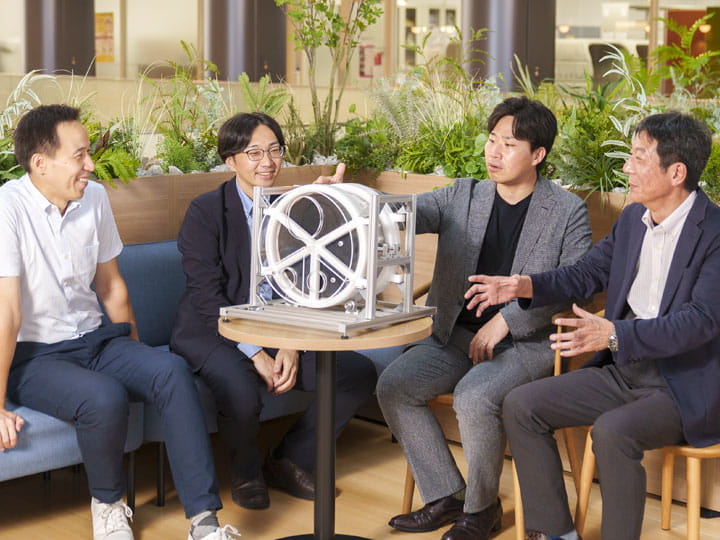
Decentralized exhaust gas circulation one-by-one VOC removal system - Utilizing a compact and lightweight rotor to achieve both energy saving and VOC removal
In order to downsize exhaust circulation concentration systems that treat VOCs, we have achieved downsizing and weight reduction of 20-30% or more for the core component, the rotor. We are looking for collaboration partners who can work together with us to create new VOC treatment solutions that utilize this rotor to achieve both energy savings and VOC removal.
more
-
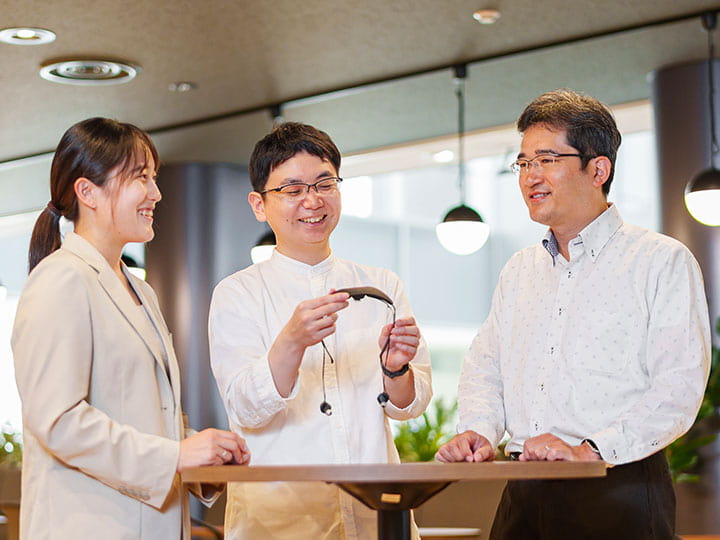
Brain NaviTM — A simple and high-precision brainwave analysis service that enables accurate “visualization” of momentary sensations and cognition
Brain NaviTM enables accurate understanding of human brain responses to stimuli such as seeing and hearing. We are looking for partners who seek to solve challenges by utilizing this analysis data to accurately personalize products and services.
more
-

Increasing the added value of products with ultra-thin, high sensitivity sheet-shaped temperature sensors called film thermistors
Murata has developed an ultra-thin sheet-shaped film thermistor with a thickness of 50 microns that can be freely bent or sandwiched and is capable of real-time, multi-point temperature measurement of objects. We are seeking partner companies that wish to develop new products utilizing this technology or that want to make use of it in thermal analysis to solve challenges.
more
-

NeuroStoneTM 3D-printed small free-form inter-connected ceramic devices
NeuroStoneTM is a 3D-printed, free-form inter-connected ceramic circuit board that enables freely three-dimensional internal wiring, thanks to Murata' s expertise in material development and co-firing. We are seeking partners to collaborate with us in leveraging this small free-form inter-connected ceramic 3D printing technology to create products that contribute to equipment downsizing and less invasive medical care.
more
-
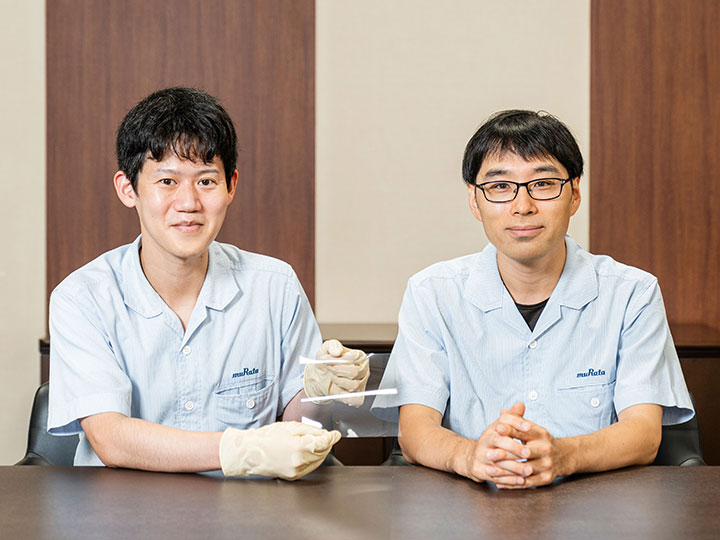
Transparent conductive film using the new material of MFT that can be both conductive and freely shaped
Murata Manufacturing is looking for partners to create new value together with us by utilizing bendable transparent conductive film and transparent conductive film that can be adapted to complex shapes using the new material of MFT (*in-house name).
more
-

Lithium-ion secondary battery characterization and degradation diagnosis solution
We are looking for collaboration partners, who are aiming to use batteries safely and efficiently by utilizing battery characterization and deterioration diagnosis technology to non-destructively measure the capacity deterioration factors and resistance increase of Lithium-ion secondary batteries.
more
-

Quadruple the power of lithium ion secondary batteries with porous current collectors
We are looking for co-creation partners for the development of porous current collectors and their implementation into lithium ion secondary batteries that would achieve the fourfold power generation compared to that of the conventional lithium ion secondary batteries.
more
-

Magnetorheological Elastomer (MRE) That Can Reproduce Hardness from Marshmallows to Erasers
Murata Manufacturing is looking for partners who can collaborate with us to create new products and applications by using the magnetorheological elastomer (MRE) material whose hardness changes when a magnetic field is applied to it.
more
-

Exclusive Acoustic Metamaterial from Murata Manufacturing - Ultrasound Transmission Metamaterial technology that enhances the ultrasound transmission through materials
Murata Manufacturing is looking for creative partners that increase the transmittance of ultrasonic waves to enhance the functionality of their devices and open up new markets.
more
