

- HOME
-
Collaboration Partner Recruitment
- mask voice clip
- Underwater CO2 measurement and evaluation service
- Decentralized Exhaust Gas Circulation one-by-one VOC removal system
- Brain NaviTM Brainwave Analysis Service
- Film thermistor
- NeuroStoneTM
- Transparent Conductive Film
- Lithium-ion secondary battery characterization and degradation diagnosis solution
- Next-generation lithium ion secondary batteries
- Magnetorheological Elastomer (MRE)
- Ultrasound Transmission Metamaterial
- Collaboration Partner Recruitment Top
- New Business Creation Initiatives
- Activity Introduction
- Notices
Development of a measuring device that
makes it possible to visualize the amount of
CO2 in seaweed beds "Underwater CO2
measurement and evaluation service"
revolutionizes evaluation of blue carbon
We are looking for partners who want to work with us to address social issues
related to the ocean, such as restoration of seaweed beds, utilizing a sensor
that enables accurate and continuous measurement of underwater CO2 concentration.
Contact Us
-
Description
Partners who want to work with us to achieve sustainable and rich oceans that can be passed on to future generations, by restoring seaweed beds and addressing other social issues related to the ocean
-
Products used
An underwater CO2 measurement and evaluation service utilizing an NDIR-type underwater CO2 concentration measuring device that can be installed anywhere and achieves high reliability through automatic calibration
*This product is under development.Therefore, the product specifications are subject to change without advance notice.
MATCHING
POINT
- ・Companies, organizations, local governments, and others interested in restoration of seaweed beds and creation of blue carbon credits
- ・Companies, organizations, local governments, and others looking to expand their business in coastal regions
- ・Companies, organizations, and others exploring new business models through visualization of marine environments

Blue carbon uses marine ecosystems to sequester carbon in the ocean, and is attracting attention as a new trump card in measures against global warming. It holds great potential, and carbon credit trading is also advancing. However, issues remain in methods for evaluation of CO2 absorption, and the blue carbon market has yet to achieve the anticipated growth. To overcome this situation, Murata Manufacturing is advancing the development of an underwater CO2 concentration measuring device capable of direct and continuous measurement of underwater CO2. Our goal is to achieve widespread adoption of a service that directly measures and evaluates the amount of CO2 absorbed by seaweed beds based on a new evaluation method utilizing this device. We are looking for collaboration partners who will join us in utilizing this new solution to boost blue carbon creation activities.
Contents
- Blue carbon has both great potential and challenges
- Aiming for a service that directly measures and evaluates CO2 absorption by seaweed beds
- Towards a future where we can contribute to the preservation of marine environments and creation of sustainable marine businesses
- Message from the "Underwater CO2 concentration measuring device" developers
Blue carbon has both great potential and challenges
Enormous potential of blue carbon for decarbonization
Carbon that is absorbed by marine ecosystems and sequestered in the ocean for long periods is called blue carbon. In particular, seaweed beds composed of seagrass and seaweed such as eelgrass, kelp, and wakame have high CO2 absorption and carbon sequestration capability comparable to that of forests on land, making them important reservoirs for blue carbon. Due to their high potential, seaweed beds are also considered a key decarbonization measure, but they are exhibiting a steady decline, making conservation and restoration an urgent issue.
The challenges are the accuracy and effort of evaluating seaweed beds
Decarbonization measures using blue carbon hold great potential, and trading has also begun in Japan under a system called "J Blue Credit®." This system currently evaluates seaweed beds using the following method based on multiplication of seaweed bed area, seaweed bed coverage (density), and absorption coefficients.
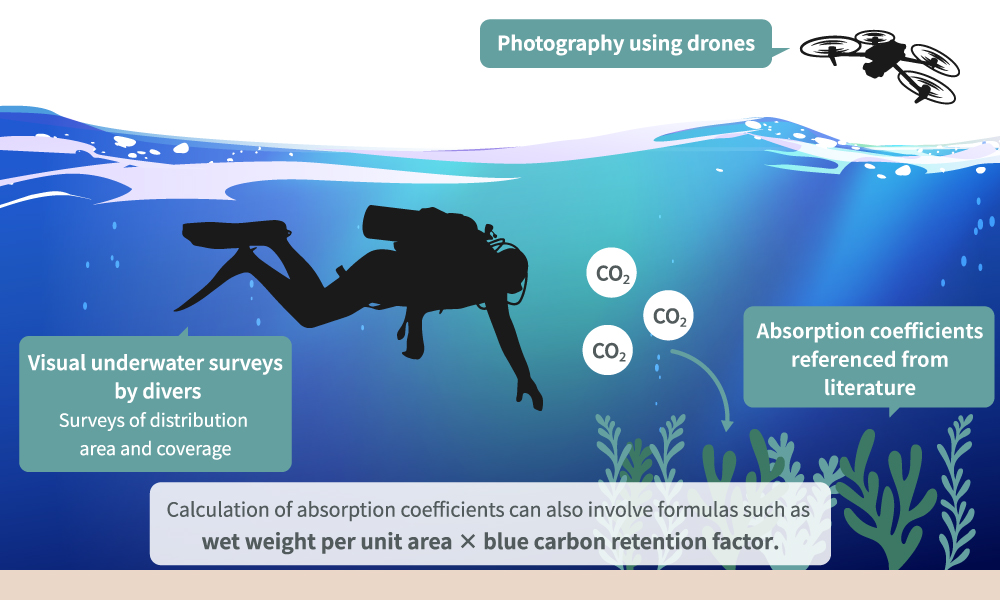 Current main methods for evaluation of seaweed beds
Seaweed bed area and coverage (density) are measured through visual observation by drones or underwater by divers. After accurately understanding the vegetation distribution of the target seaweed bed, values obtained from literature are then used to estimate the absorption amount by combining the CO2 absorption capability of each species. Current evaluation methods face challenges in terms of the effort needed to manually survey extensive seaweed beds, and accuracy due to the use of literature values, and advanced specialist knowledge is also required.
To realize international carbon credit trading, a simpler, objective, and quantitative evaluation method is needed. Therefore, Murata launched a project to realize a convenient and highly accurate underwater CO2 concentration measurement service. And now, some four years since the project's inception, we have succeeded in demonstrating the underwater CO2 concentration measuring device that is the key to spreading this service.
Aiming for a service that directly measures and evaluates CO2 absorption by seaweed beds
Standalone, maintenance-free underwater CO2 concentration measuring device
Continuous measurement of CO2 concentration in the ocean is essential for quantitative evaluation. This calls for a measuring device that can be left for long periods, but normal measuring devices experience a phenomenon called "drift" in which measurement values change gradually with prolonged use. This occurs due to factors such as deterioration of components over time and cannot be eliminated, so regular, manual calibration is required.
However, Murata has developed an underwater CO2 concentration measuring device, based on our CO2 gas sensor, that achieves automatic calibration by using the two wavelengths of 4.3 µm (measurement light) and 3.9 µm (reference light) with a structure consisting of a single light source, optical path, and photodetector. This achieves both long-term stability and high measurement accuracy, enabling continuous maintenance-free operation.
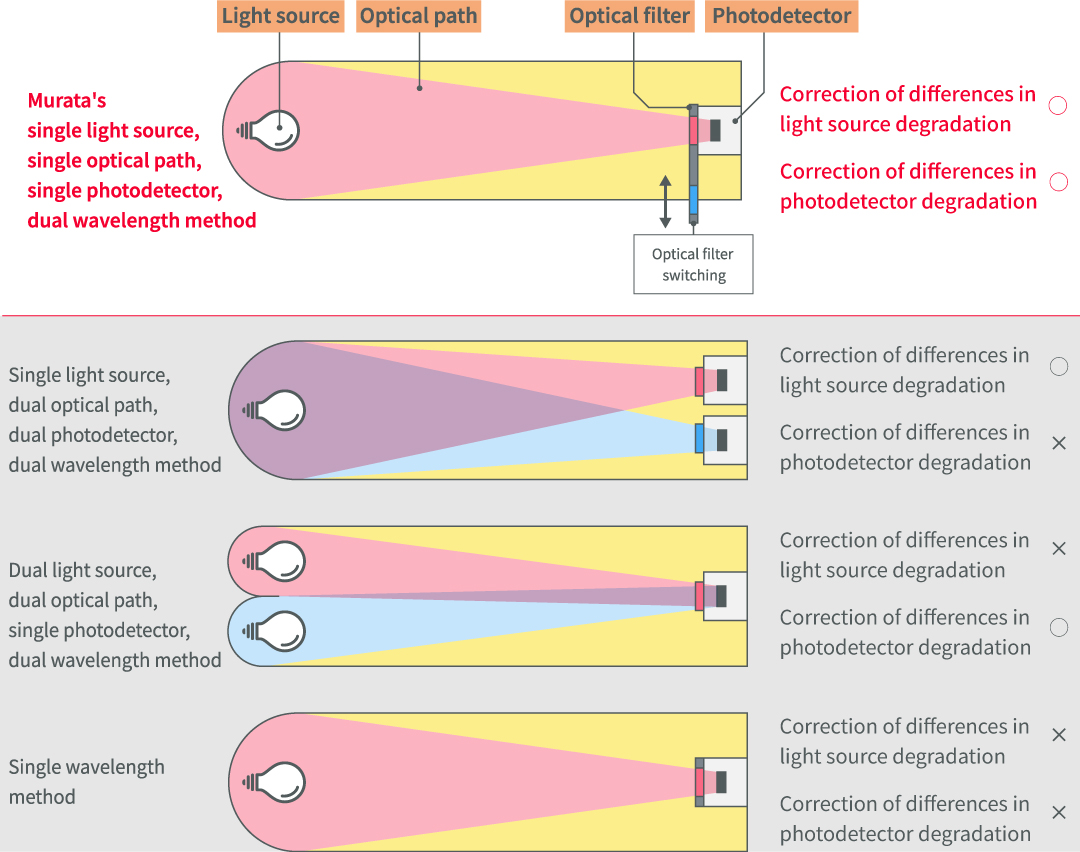 Murata CO2 gas sensor capable of automatic calibration and correction
The measuring device is also provided with waterproof performance designed for underwater measurement. This enables continuous measurement not only at the ocean surface but also with the measuring device completely submerged underwater.
Successful visualization of changes in underwater CO2 concentration
To measure the underwater CO2 concentration, it is necessary to equalize the underwater CO2 concentration with the CO2 concentration inside the measuring device. In order to quickly achieve this concentration equilibrium, the underwater CO2 concentration measuring device uses a gas-permeable membrane with a large surface area on the gas balancer. This enhances the efficiency of gas uptake into the measuring device, enabling responsive measurement of CO2 concentration in the ocean.
In addition, the compact design with excellent portability makes it possible to submerge not just the probe part but the entire device in the ocean. This allows for continuous and direct measurement of CO2 concentration, making it possible to understand continuous changes in underwater CO2 concentration, which was previously a challenge to measure.
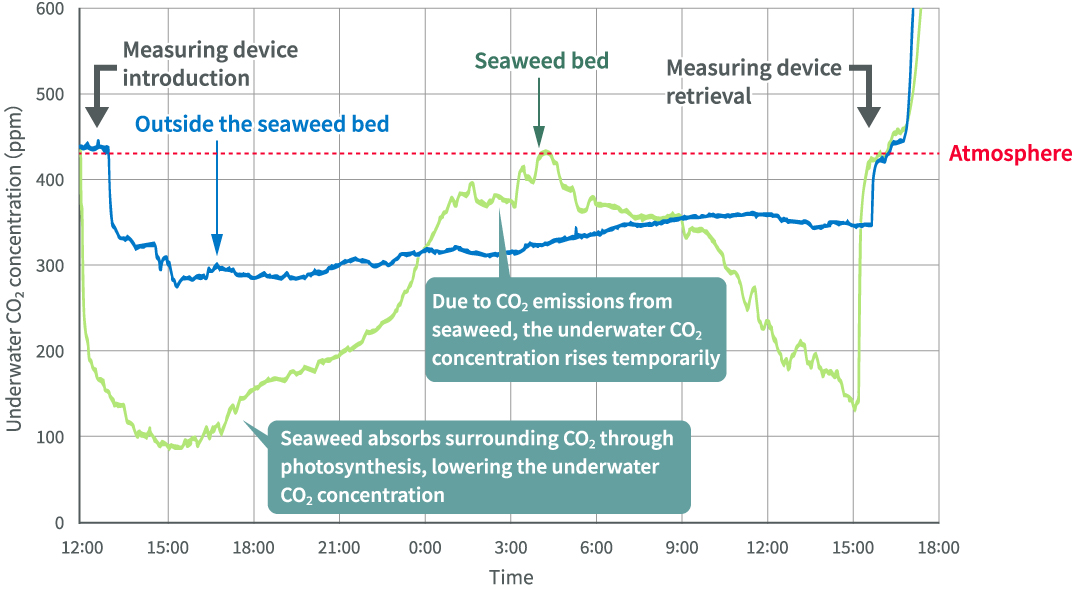 Change in CO2 concentration in the ocean
Verified data from Tamanoura Bay, Goto City, Nagasaki Prefecture (conducted in March 2025)
Paper Published on
Our Underwater CO2 Concentration Measuring Device
A paper co-authored by Shizuoka University, the Port and Airport Research Institute, and Murata, titled “A Compact pCO2 Measurement System Using a Gas Permeable Membrane for Underway and Moored Observations in Coastal Waters” was published in the “Environmental Monitoring and Assessment” international environmental monitoring journal on November 17, 2025.
This paper reports on the results of a comparative test with sensors from other companies through continuous underway observations in Tokyo Bay and a comparative test with analysis of water sampled during moored observations in Komuke Lagoon in Hokkaido. Through these results, the paper demonstrates that the underwater CO2 concentration measuring device developed by Murata has comparable measurement accuracy. The paper also shows that our device offers several advantages, including a compact size, easy portability, and low power consumption. To read the paper, please visit the link below.
Seeking to create a market by providing an evaluation service
Murata's goal is not to merely develop and sell the underwater CO2 concentration measuring device, but to offer a comprehensive evaluation service. We seek to address the issues facing blue carbon creation activities, and enable quantitative evaluation of CO2 absorption by seaweed beds, which was previously a challenge. We also hope to build a foundation for sustainable blue carbon creation activities, and create a market.
Towards a future where we can contribute to the preservation of marine environments and creation of sustainable marine businesses
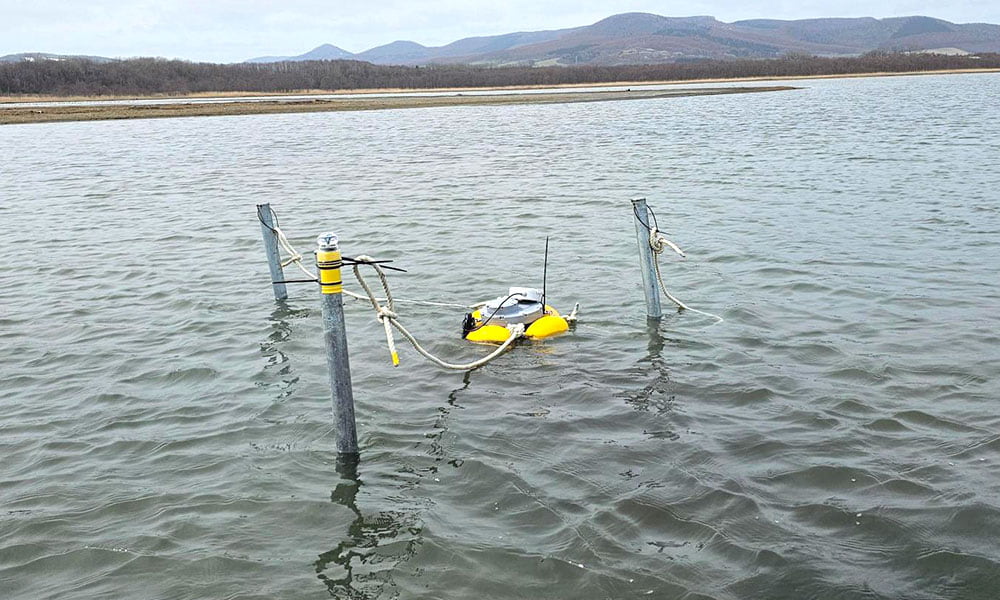
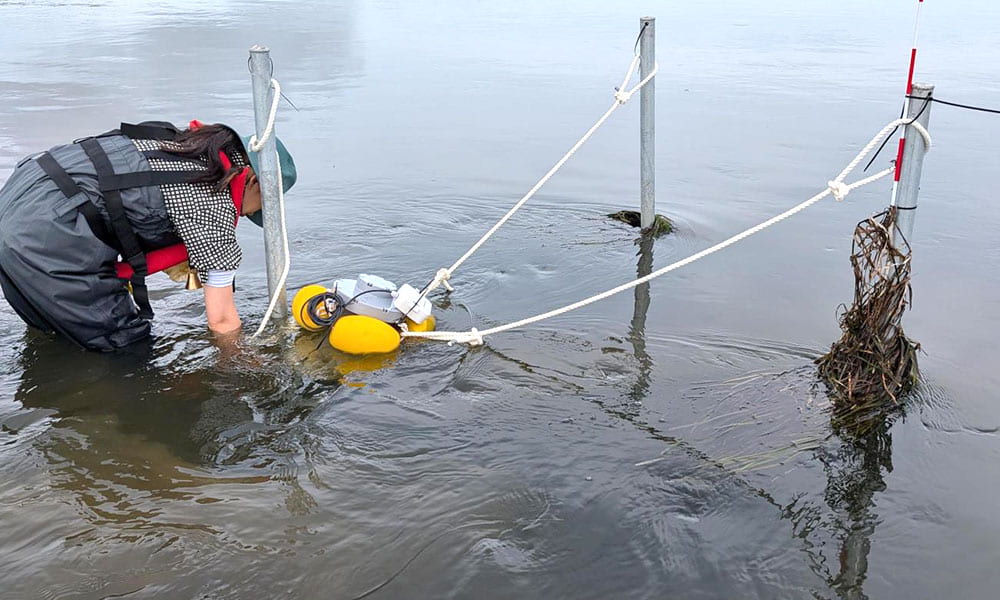
Field tests conducted on a nationwide scale
Four years have passed since the launch of this project, and we are currently conducting field tests on a nationwide scale from Hokkaido to Okinawa. Our network is gradually expanding through collaboration with local fisheries cooperatives and others, and we are also continuing efforts to improve the measuring device, such as by extending measurement time and improving accuracy.
Murata hopes to see this measuring device utilized by even more people to achieve both preservation of the marine environment and expansion of the blue carbon market.
A new marine business model realized through collaboration
Murata offers CO2 measurement technology that enables easy and highly accurate measurement with stable long-term operation, as well as analytical technology. Through this, we hope to overcome the current tradeoff between accuracy and effort, and to work together with many related parties to establish methods for evaluating blue carbon and provide an evaluation service.
Murata's goal is to collaborate with a wide range of partners, including seaweed bed restoration businesses, and to play a part in creating business mechanisms. Our foremost desire is to maintain and restore seaweed beds, and ultimately leave the best marine environment possible for future generations.
We aim to not only provide technology, but to work together with partners to create new value to realize sustainable marine businesses and develop a healthy blue carbon market.
Inquiries
Murata is looking for partners who seek to evaluate the amount of CO2 absorbed by seaweed beds utilizing our underwater CO2 concentration measuring device.
If your company is interested in this service, please feel free to contact us using the inquiry form.
*This product is under development.Therefore, the product specifications are subject to change without advance notice.


Message from the "Underwater CO2 concentration measuring device" developers
Murata Manufacturing Co., Ltd.
Corporate Technology Planning & New Business Development Group
Corporate Technology & Business Development Unit
- Yoshiyuki Nishihara
Masako Tenpaku -
The ocean is called the final frontier of visualization, and remains a region with much less information compared to land. We have actually only recently come to understand that the underwater ecosystem contributes as much or even more to carbon sequestration than land. Murata hopes to contribute to visualization and sustainable use of the ocean through the use of this underwater CO2 concentration measuring device. If you are involved in CO2 concentration measurement and seaweed bed restoration and are interested, please feel free to contact us. We sincerely look forward to meeting partners who will work with us to open up a new future.
Furthermore, underwater CO2 concentration is also deeply related to organisms such as fish and shellfish, making this technology potentially useful not just for blue carbon but also in a wider range of fields. If you have any requests, or would like more information - not only on the ocean, but also rivers, lakes, and other water environments - please feel free to consult with us.

Inquiries
Murata is looking for partners who seek to evaluate the amount of CO2 absorbed by seaweed beds utilizing our underwater CO2 concentration measuring device.
If your company is interested in this service, please feel free to contact us using the inquiry form.
*This product is under development.Therefore, the product specifications are subject to change without advance notice.
Project Examples for Collaboration
-

A revolutionary advance in voice input less affected by noise clipped to a mask, mask voice clip is an input device that isolates the wearer’s voice
Mask voice clip is a voice input device clipped to masks for highly accurate real-time voice isolation even in noisy environments.
We seek parties interested in this technology, those with ideas for potential applications, and those who might consider voice input deployment in medical settings, manufacturing, or construction.more
-
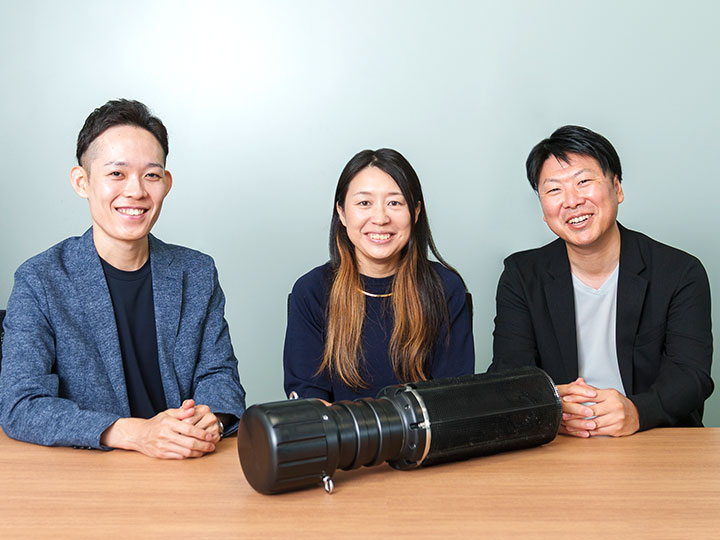
Development of a measuring device that makes it possible to visualize the amount of CO2 in seaweed beds "Underwater CO2 measurement and evaluation service" revolutionizes evaluation of blue carbon
Murata's underwater CO2 concentration measuring device enables easy and highly accurate measurement of CO2 in the ocean. Continuous measurement of underwater CO2 concentration has traditionally been considered difficult, so, by making it more accessible, this device holds the potential to greatly change methods for evaluating blue carbon. We are seeking partners for collaboration, including businesses, organizations, and others facing challenges in evaluating blue carbon, as well as companies and others interested in carbon credit trading.
more
-
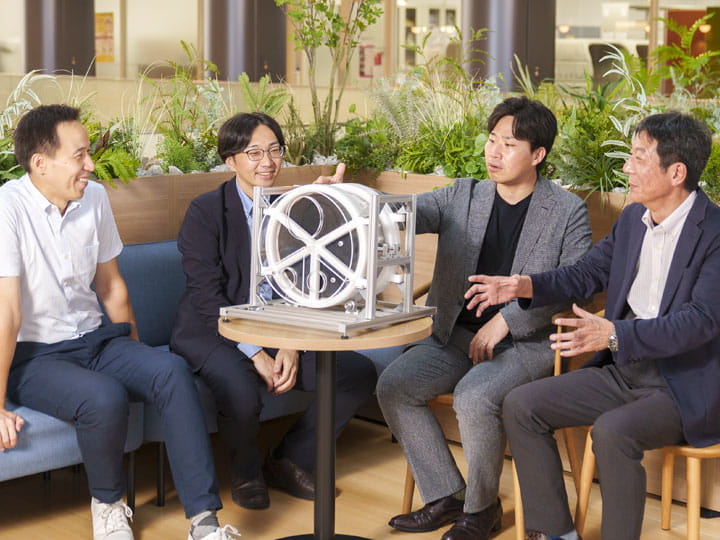
Decentralized exhaust gas circulation one-by-one VOC removal system - Utilizing a compact and lightweight rotor to achieve both energy saving and VOC removal
In order to downsize exhaust circulation concentration systems that treat VOCs, we have achieved downsizing and weight reduction of 20-30% or more for the core component, the rotor. We are looking for collaboration partners who can work together with us to create new VOC treatment solutions that utilize this rotor to achieve both energy savings and VOC removal.
more
-
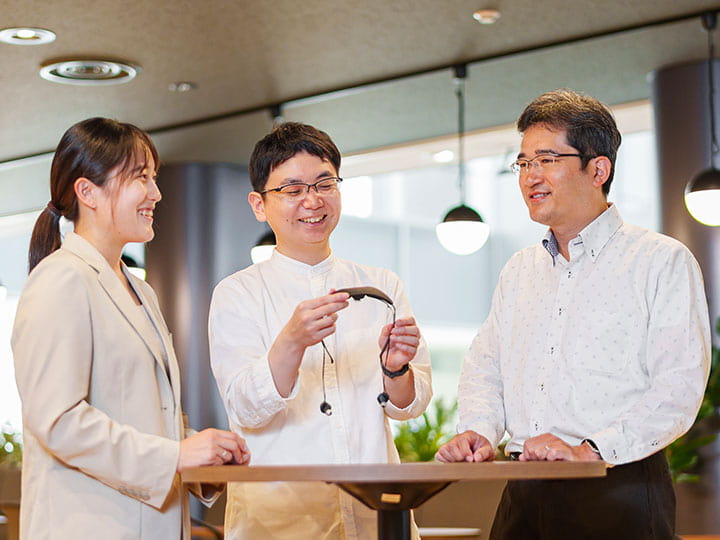
Brain NaviTM — A simple and high-precision brainwave analysis service that enables accurate “visualization” of momentary sensations and cognition
Brain NaviTM enables accurate understanding of human brain responses to stimuli such as seeing and hearing. We are looking for partners who seek to solve challenges by utilizing this analysis data to accurately personalize products and services.
more
-

Increasing the added value of products with ultra-thin, high sensitivity sheet-shaped temperature sensors called film thermistors
Murata has developed an ultra-thin sheet-shaped film thermistor with a thickness of 50 microns that can be freely bent or sandwiched and is capable of real-time, multi-point temperature measurement of objects. We are seeking partner companies that wish to develop new products utilizing this technology or that want to make use of it in thermal analysis to solve challenges.
more
-

NeuroStoneTM 3D-printed small free-form inter-connected ceramic devices
NeuroStoneTM is a 3D-printed, free-form inter-connected ceramic circuit board that enables freely three-dimensional internal wiring, thanks to Murata' s expertise in material development and co-firing. We are seeking partners to collaborate with us in leveraging this small free-form inter-connected ceramic 3D printing technology to create products that contribute to equipment downsizing and less invasive medical care.
more
-
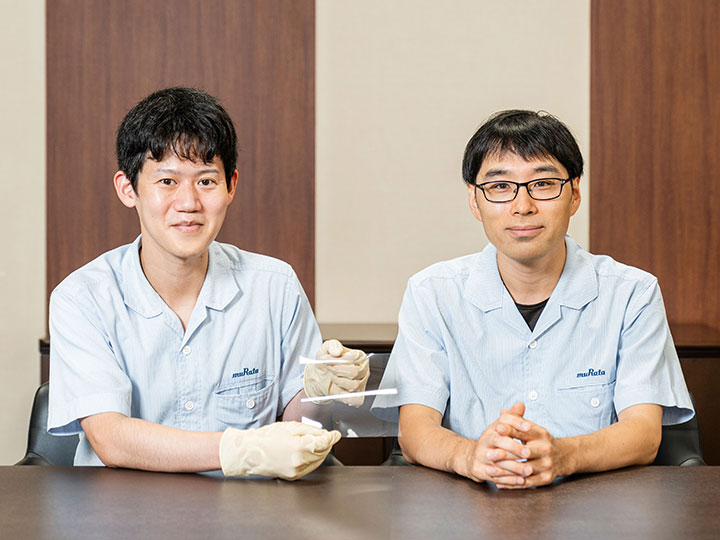
Transparent conductive film using the new material of MFT that can be both conductive and freely shaped
Murata Manufacturing is looking for partners to create new value together with us by utilizing bendable transparent conductive film and transparent conductive film that can be adapted to complex shapes using the new material of MFT (*in-house name).
more
-

Lithium-ion secondary battery characterization and degradation diagnosis solution
We are looking for collaboration partners, who are aiming to use batteries safely and efficiently by utilizing battery characterization and deterioration diagnosis technology to non-destructively measure the capacity deterioration factors and resistance increase of Lithium-ion secondary batteries.
more
-

Quadruple the power of lithium ion secondary batteries with porous current collectors
We are looking for co-creation partners for the development of porous current collectors and their implementation into lithium ion secondary batteries that would achieve the fourfold power generation compared to that of the conventional lithium ion secondary batteries.
more
-

Magnetorheological Elastomer (MRE) That Can Reproduce Hardness from Marshmallows to Erasers
Murata Manufacturing is looking for partners who can collaborate with us to create new products and applications by using the magnetorheological elastomer (MRE) material whose hardness changes when a magnetic field is applied to it.
more
-
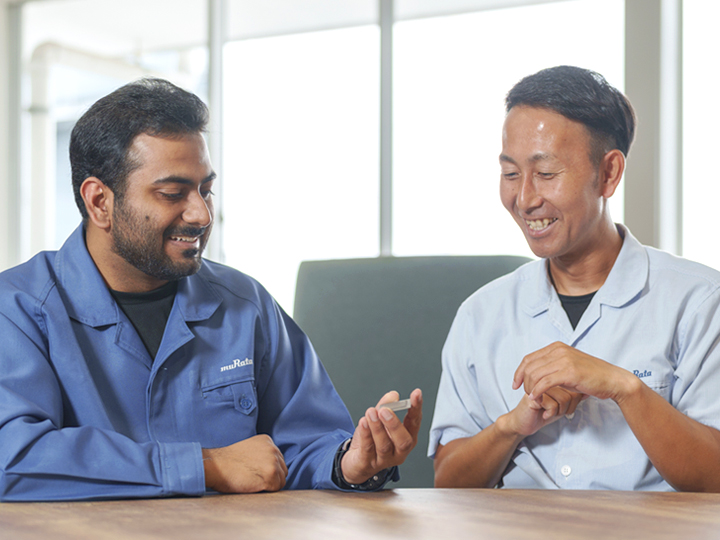
Exclusive Acoustic Metamaterial from Murata Manufacturing - Ultrasound Transmission Metamaterial technology that enhances the ultrasound transmission through materials
Murata Manufacturing is looking for creative partners that increase the transmittance of ultrasonic waves to enhance the functionality of their devices and open up new markets.
more
