
Carbon Neutrality:
Reasons Why Companies Should
Take Action and Practical Steps to Take
As global warming progresses, companies are being asked to make the full-scale transition to decarbonization management. The manufacturing industry in particular emits large amounts of greenhouse gases such as CO2. Accordingly, it plays an important role in realizing carbon neutrality throughout society. Furthermore, as international initiatives like RE100 set new standards for energy procurement by companies, delays in responding to this challenge may lead to a loss of competitiveness.
Table of Contents
- What Is Carbon Neutrality? The First Step to Decarbonization That Companies Should Take
- Challenges in Decarbonization Facing the Manufacturing Industry
- Three Steps to Realizing Decarbonization
- What Is RE100? New Standards Calling for Companies to Procure Renewable Energy
- Corporate Benefits Brought by Decarbonization
- Case Study of Renewable Energy Promotion at Murata Manufacturing
- Summary: Now is the Time to Take Action to Realize Carbon Neutrality
What Is Carbon Neutrality?
The First Step to Decarbonization That Companies Should Take
The term carbon neutrality now frequently appears in the news and elsewhere. The manufacturing industry in particular emits large amounts of CO2 in daily operations. Accordingly, working to realize decarbonization is an unavoidable challenge. In this article, we outline the definition and background of carbon neutrality, and the basic points that companies should understand.
Definition and Background of Carbon Neutrality
Carbon neutrality refers to the state in which the amount of greenhouse gases emitted, such as CO2, and the amount absorbed are in balance to effectively reduce emissions to near zero. Rather than completely eliminating emissions, the idea is to reduce emissions as far as possible and to then offset the remainder through forest conservation, the utilization of renewable energy, and other efforts.
The Japanese government has also declared its goal is to be carbon neutral by 2050. It is calling on companies and local governments to take concrete action. The establishment of this goal is driven by the frequent occurrence of abnormal weather due to climate change, and the international trend toward decarbonization.
Challenges in Decarbonization Facing the Manufacturing Industry
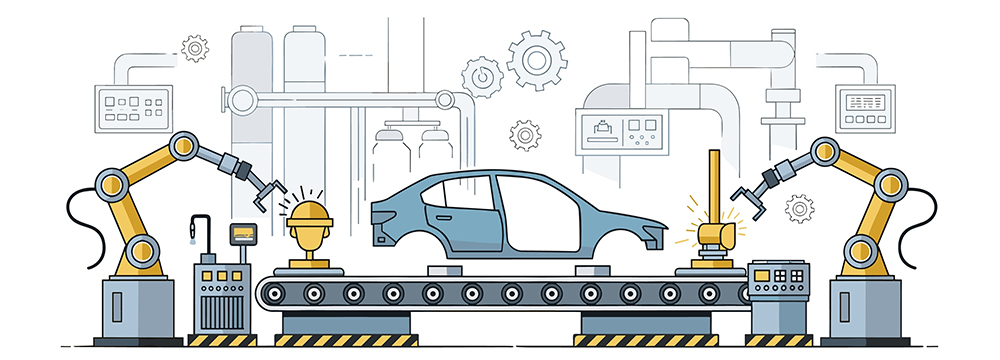
Manufacturing sites consume a large amount of energy and emit CO2 in the use of boilers, air conditioning, lighting, and manufacturing processes. If companies do not take measures to combat this, they may not be able to comply with stricter regulations or meet environmental requirements from business partners. That increases the risk of losing business opportunities.
Three Steps to Realizing Decarbonization
An incremental and strategic approach is essential to promote decarbonization management. Here, we take a look at the three basic steps that companies can easily take.
(1) Visualize Emissions and Analyze the Current Situation
The first step is to accurately understand your company's energy usage situation and CO2 emissions. Introducing an energy visualization tool allows you to understand your energy usage situation in real time. This clarifies where there is waste and which equipment consumes the most energy. The analysis in this stage forms the foundation for determining the priority of subsequent measures.
(2) Implement Energy-saving Measures
The next step that should be taken is to review existing equipment and operational methods to reduce energy waste. For example, measures like the following are effective.
Upgrade to high-efficiency air conditioning and lighting equipment
The first step to reducing energy consumption is to increase the efficiency of the equipment itself. The latest air conditioning equipment and LED lighting significantly reduce the amount of electric power required compared to conventional equipment. This makes it possible to steadily reduce the amount of electric power used while maintaining the same performance. Upgrading equipment produces long-term energy-saving benefits and forms the foundation for reducing CO2 emissions derived from the use of electric power.

Reduce the amount of fossil fuels used
The basic approach to reducing Scope 1 CO2 emissions (generated by a company's own activities) is to first curb the amount of fuel burned by improving the efficiency of equipment. Next, it is possible to steadily reduce direct emissions by switching the fossil fuels being used to lower-carbon alternatives. Furthermore, promoting the electrification of boilers and other heat sources gradually reduces dependence on fossil fuels. This leads to a minimization of Scope 1 emissions.
Through these initiatives, companies can expect to lower energy costs and reduce CO2 emissions at the same time.
(3) Introduce Renewable Energy
Alongside energy saving, introducing renewable energy is an important step. Utilizing solar power generation and storage batteries makes it possible to reduce the amount of electric power companies purchase externally, and promotes decarbonization of the electric power they use.
In addition, introducing renewable energy makes it easier to comply with international standards like RE100. It is also effective in demonstrating a company's commitment to the environment to the public.

What Is RE100?
New Standards Calling for Companies to
Procure Renewable Energy
RE100 is an international initiative that aims for companies to source 100% of the electric power they use from renewable energy. More than 400 leading companies around the world have joined this initiative as of January 2026. Many companies in Japan are also either participating or using its standards as a reference. Joining RE100 serves as a means for companies to demonstrate their strong commitment to decarbonization both internally and externally. Participation also leads to increased trustworthiness.
The revision to RE100 in 2022 introduced a new standard of "within 15 years" based on the start date of the operation of power generation equipment to determine the additionality of renewable energy. This means it has now become necessary to use new renewable energy sources as far as possible. Amid this trend, on-site power generation, in which companies themselves introduce new renewable energy equipment, is attracting attention as a way to create new power sources. It is also becoming increasingly important to employ energy management to ensure the electric power generated on-site is used completely without waste.
Corporate Benefits Brought by Decarbonization
Initiatives for decarbonization are not simply a cost; they are also part of a company's growth strategy. Here, we take a look at the three main benefits that companies can obtain.
(1) Reduce Costs and Improve Operational Efficiency
Optimizing energy use curbs the running costs for electric power and fuel. Moreover, this initiative provides the impetus to review the equipment operating situation and process flow. This makes it easier to consider improvement measures that fit the actual on-site conditions. As a result, the equipment operating efficiency improves, and waste processes and losses hidden in the operational process can be reduced.

(2) Increase Brand Value and Trustworthiness, and Address ESG Investment
A company's commitment to being environmentally friendly strengthens trust among customers and business partners. Environmental friendliness is often a selection standard for B2B businesses in particular. Accordingly, increasing brand value creates new business opportunities.
Such a commitment also enhances the company's reputation among investors who place emphasis on environmental, social, and governance (ESG) issues. That expands its financing options. This is an important benefit not to be overlooked.

(3) Secure Personnel
The extent to which a company sincerely works to realize decarbonization has a significant impact on its ability to recruit and retain young environmentally conscious personnel. Generations with a high level of interest in climate change have a stronger tendency to place emphasis on a company's commitments and values. Companies that actively engage in environmentally friendly initiatives naturally find it easier to attract like-minded personnel. In addition, outlining a clear environmental vision as a company makes it easier for each employee to feel that his or her work is contributing to society. This also leads to increased motivation and enhanced engagement throughout the company. Ultimately, such initiatives boost the sustainable growth of the organization.

Case Study of Renewable Energy Promotion at Murata Manufacturing
Achieving decarbonization management requires not only theory but also practice. Here, we take a look at a case study in our company as a part of the manufacturing industry.
Initiatives at Kanazu Murata Manufacturing
Located in Fukui Prefecture, Kanazu Murata Manufacturing has introduced large-scale solar power generation equipment and storage batteries, as well as the efinnos energy management system (EMS) to efficiently operate them.
efinnos to predict with a high degree of accuracy electric power demand and supply based on past electric power usage and weather data. Based on these predictions, the system automatically and optimally controls the equipment, which includes solar power generation and storage batteries.
Through this initiative, Kanazu Murata Manufacturing successfully switched all of the electric power it uses at its facilities to renewable energy in November 2021. This means it has achieved 100% renewable energy.
Development as a Clean Energy Park
In June 2025, the Clean Energy Park reopened after being renovated on the premises of Kanazu Murata Manufacturing. This facility serves as a showcase where visitors can experience Murata Manufacturing's environmental initiatives. It is a place to learn about how the company's products and activities are contributing to solving environmental issues through actual data and systems.
The aim is to deepen understanding and empathy for creating a sustainable future, and to meet environmental issues head-on together with visitors.


Summary:
Now is the Time to Take Action to Realize Carbon Neutrality
Key phrases like carbon neutrality, RE100, and decarbonization are no longer limited to a few leading companies. As countries around the world make progress on reforming their systems and international standards also evolve, all companies are being asked to take action.
The first step is to accurately understand the current situation by visualizing emissions. After that, introducing energy saving measures and renewable energy makes it entirely possible to realize decarbonization.